For most of his life, Canadian businessman Hugh Maddin whose career spans decades in mining, capital markets, and international finance had believed in the promise of emerging markets—the idea that nations rich in resources and potential could offer both reward and renewal to those bold enough to invest. What should have been a routine financial transaction became an eight-year descent into corruption, false assurances, and psychological torment. His attempt to repatriate $103 million USD legally earned in Nigeria left him not only drained of more than $2 million in personal payments to government intermediaries, but robbed of nearly a decade of peace of mind—while shaking his family’s faith in the very idea of investing in emerging markets.
From 2015 onward, Maddin’s case collided directly with the tenure of the now-disgraced former Central Bank of Nigeria Governor Godwin Emefiele. That era was defined by foreign exchange shortages, erratic monetary policy, and mounting accusations of systemic graft. As multinational corporations like British Airways, Emirates Airlines, and Shoprite sounded alarms over billions of dollars in trapped funds, Nigeria’s image as an investment destination began to unravel. Maddin, like countless others, found himself ensnared in a system that looked less like financial governance and more like a predatory machine.
What should have been a transparent transfer was twisted into a gauntlet of shakedowns. Ministries and agencies legally mandated to support foreign investors became choke points of delay, demanding endless “processing fees.” Meanwhile, Emefiele’s aides and confidants allegedly orchestrated what sources described as a protection racket, extracting payments under the guise of unlocking approvals that never came. Every step forward dissolved into new paperwork, new conditions, and new demands, trapping Maddin in an endless loop of bureaucratic extortion.
“I kept thinking the next transfer would be the last, the one that would finally unlock the funds,” Maddin told this reporter in a recent interview; his voice carried the weight of exhaustion but also the sharp edge of vindication, as he recounted wiring hundreds of thousands of dollars in tranches, at first to lower-level bureaucrats and later directly to individuals who claimed to speak on behalf of the Governor himself, only to discover that nothing tangible ever materialized beyond promises and more promises.
At one stage, Maddin was granted a rare audience with Governor Emefiele himself, and he remembers the conversation vividly; the central banker reassured him that his situation was under control and instructed him to remain patient while continuing to “comply with necessary protocols,” which in practice translated into yet more untraceable payments, more faceless aides making late-night calls, and more paperwork stamped but never honored, until hope itself seemed like a cruel mirage designed to keep him tethered.
His Family, close friends and business associates begged him to abandon the pursuit; they urged him to write off the loss rather than pour good money after bad; yet, consumed by the knowledge that $103 million remained locked in Nigeria and still technically his, Maddin pressed on, until by 2023 he had exhausted not only his finances but also his optimism, resigned to the belief that he would die without seeing the funds returned.
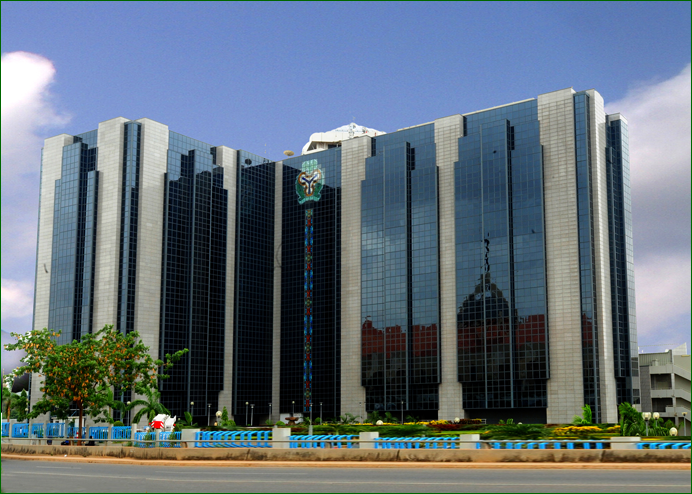
The turning point came with the dramatic fall of Emefiele and the appointment of Olayemi Cardoso as the new Central Bank Governor. Cardoso inherited a central bank in crisis: a collapsing naira, spiraling inflation, and a backlog of billions owed to foreign firms. Yet he also inherited something else—an urgent mandate to restore trust. For investors like Maddin, long conditioned to disappointment, the promise of reform was dismissed at first as another chapter in the same long play of disappointment.
When a consultant connected to the apex bank requested a facilitation fee of $50,000 to arrange a direct meeting with Cardoso, Maddin hesitated. The ghosts of lost millions loomed large, and his family’s warnings echoed. But desperation won out, and in one last gamble he wired the money, half-expecting silence and betrayal once more.
What followed stunned him: within days he found himself in a live Zoom meeting with Governor Cardoso, who listened carefully as Maddin laid out his ordeal, his voice trembling with disbelief that after eight years of chasing shadows, he was finally speaking to the man who could resolve it. “The Governor was very sympathetic to my plight, and asked me for nothing more than my bank details,” Maddin said, his eyes still moist as he recalled the moment; “and in less than a week, the funds—every dollar of the $103 million—were transferred.”
The implications of Maddin’s case extend far beyond one man’s vindication; during Emefiele’s tenure, international corporations such as British Airways, Emirates Airlines, MTN, PZ Cussons, Unilever, Bayer, Shoprite etc all reported billions of dollars in trapped funds, eroding investor confidence and casting Nigeria as a perilous destination for global capital, yet under Cardoso’s stewardship the logjam has been systematically cleared, sending a signal to markets that transparency and reform have returned to the central bank.
“Any bottleneck that remains is simply a matter of awareness,” one senior financial official explained in Abuja; “because once Governor Cardoso is informed of a case, he ensures that payment is processed immediately, without the bureaucratic delays and shadowy toll gates that once characterized the system.”
For Maddin, the story does not end with recovery; emboldened by his experience with Cardoso and inspired by the Governor’s reformist stance, he is now in active negotiations with the Niger State Government for a Public-Private Partnership project projected to create over two thousand jobs, a development he credits entirely to the renewed trust he now feels toward Nigeria’s financial governance.
“I had reached the end of myself,” Maddin admitted; “but Governor Cardoso changed the narrative not only for me, but for every foreign investor who had given up hope—he has restored confidence, and he has made Nigeria investable again.”
And so, after eight years of betrayal, extortion, and crushing disappointment, one man’s story now reads less like a cautionary tale and more like a testament to what credible leadership can achieve; for Maddin, it is the conclusion of a long, painful chapter, and the beginning of something far more promising for Nigeria’s engagement with the world.
Read Also: Global unease, local momentum: Nigeria holds steady amid Q1 global headwinds
Join BusinessDay whatsapp Channel, to stay up to date
Open In Whatsapp